
Recently I bemoaned the lack of really critical debate in the development blogosphere. Well, on cue, Bill Easterly and Laura Freschi at the Aid Watch blog have picked another fight - this time with World Bank heavyweight Martin Ravallion, who recently predicted that the financial crisis will push 53 million more people into poverty. The number (or mutations of it) has been embraced by the World Bank and every charity and NGO on the planet (it is a interesting how skeptical many people are of econometric methods until they produce convenient numbers).
Easterly and Freschi's first volley is here, which was followed by a direct response by Ravallion here and a less direct one here. Easterly and Freschi respond again here, at which point they both resort to trench warfare in the comments section.
I'm a bit busy this week - so don't have time to comment on my thoughts on economic forecasting (those interest though should start out with the book, The Black Swan, by Nicholas Taleb, for a healthy dose of skepticism).
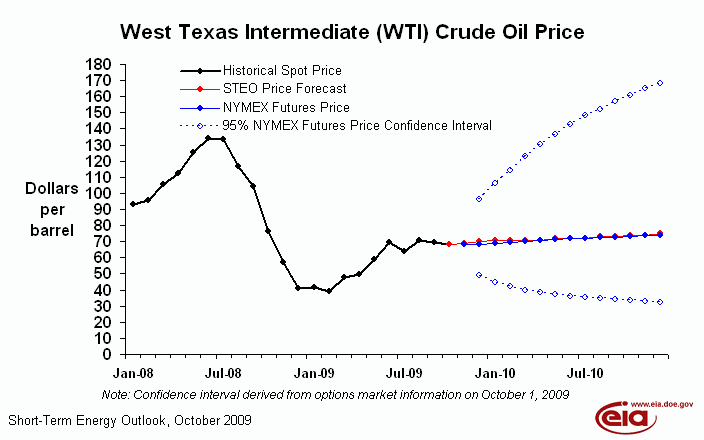
I'll leave you with this graphic posted on the Roving Bandit, on the reliability of short-term oil price forecasting:
(This will be the last Spaceballs reference, I promise).
1 Comment
53 people only? Wow, that really is some inaccurate forecasting. :-)
Ravallion says: "When we make assumptions in the absence of data, we must disclose them, and test them as far as possible."
This statement makes sense, despite being inconsistent with the WB's press releases. But if they, or indeed any of the supranationals, were completely open about their statistical assumptions / margins of error, a great deal more uncertainty would be injected into the discourse.
Good for policy, perhaps, but not for justifying programme decisions.